Jeep Gladiator Lift Kit Guide
Lift height, tire clearance, suspension geometry, supporting parts, and what to consider when choosing a lift kit for your Jeep Gladiator.
Quick Answer
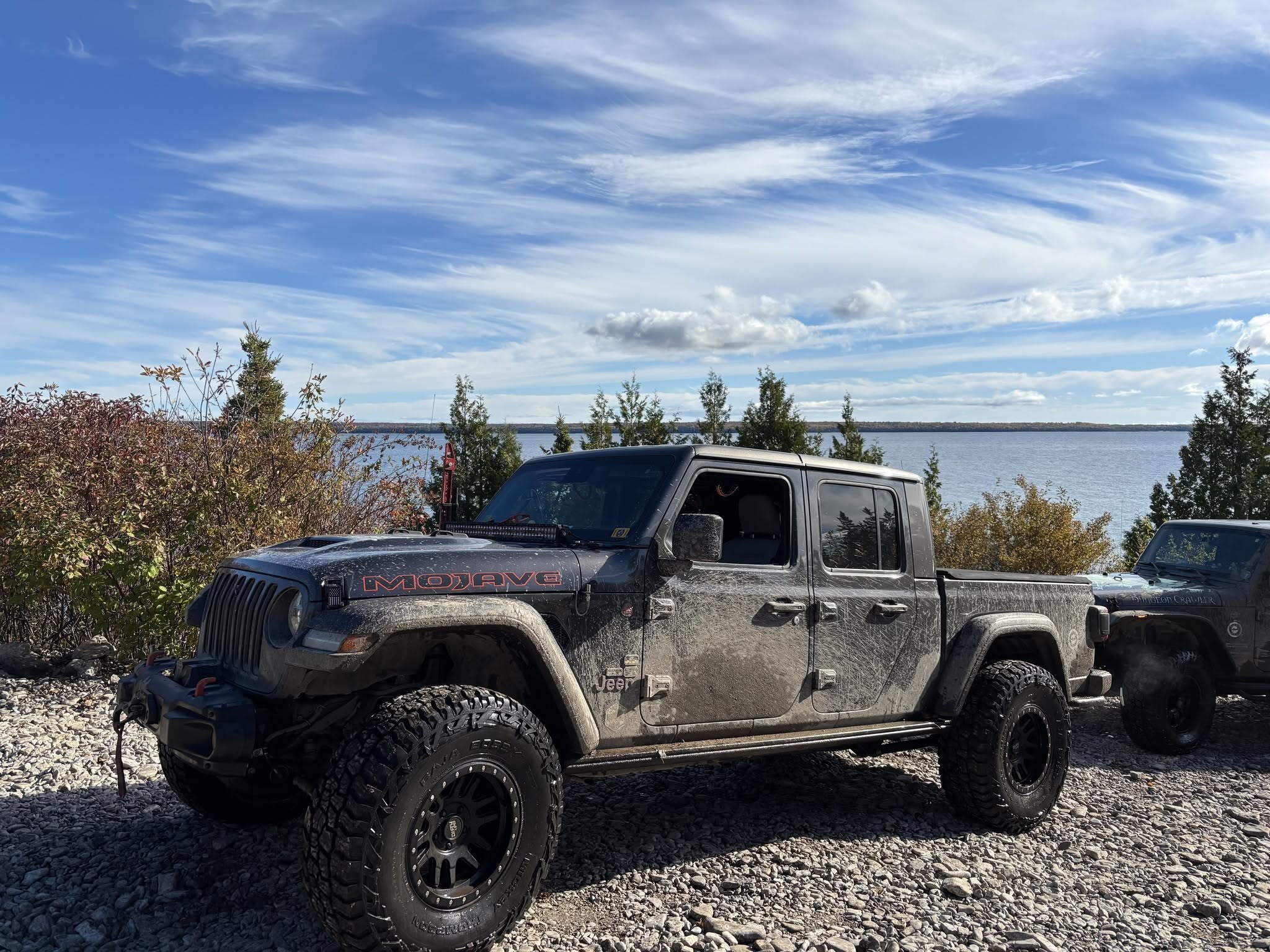
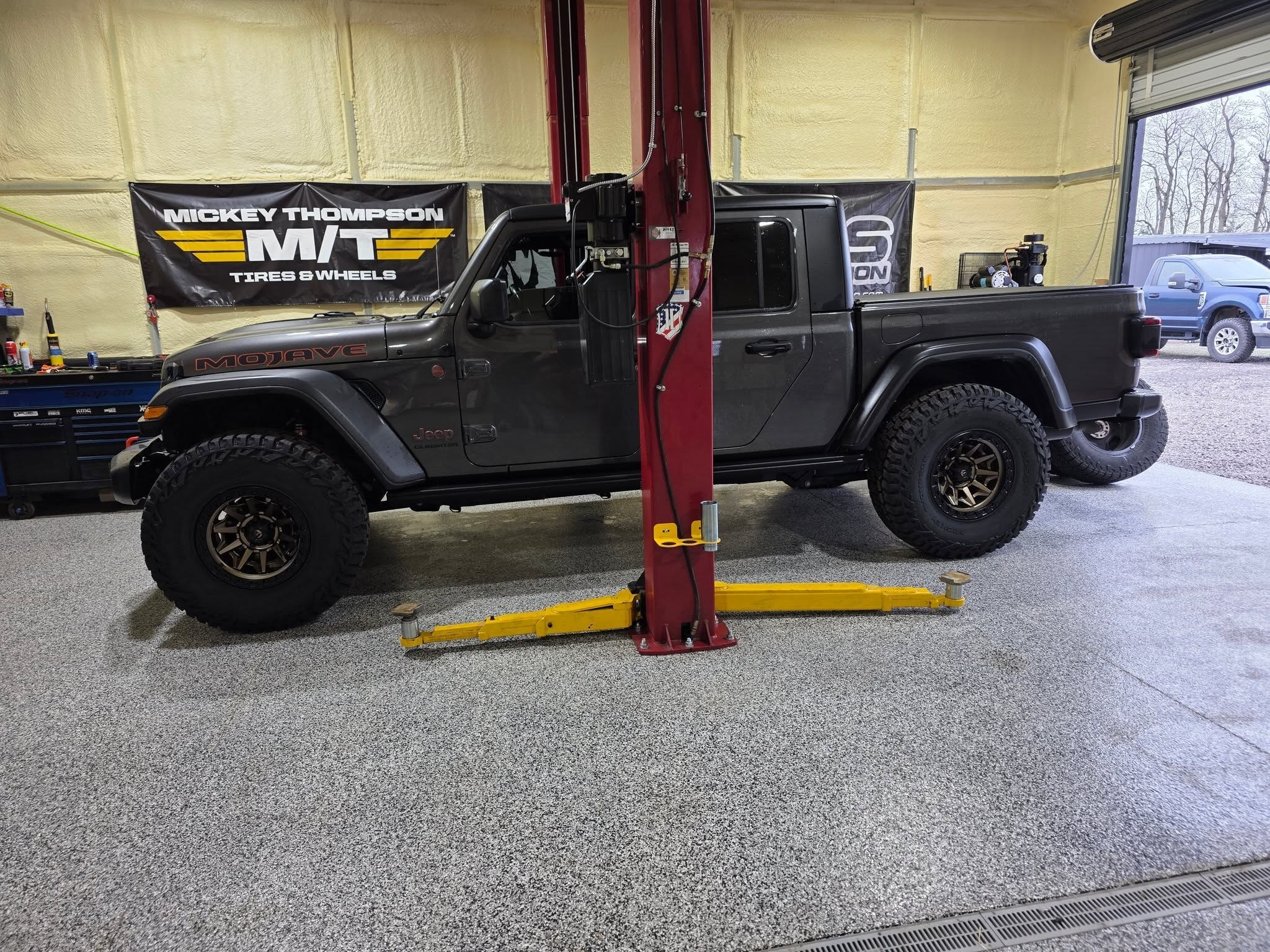
Rubicon and Mojave Gladiators can run 35 inch tires on the stock suspension, though most owners add at least a leveling kit because the truck looks better and sits more evenly. We've installed 37s on a Mojave with the stock suspension in our shop, with no trimming. Sport and Willys Gladiators need a 2 to 2.5 inch lift for 35s. Above 2.5 inches, plan on adjustable track bars front and rear to keep the suspension geometry correct.
Table of Contents
1. What You Need to Know First
A lift kit raises the Gladiator's ride height by replacing or spacing the coil springs, usually along with shocks and sometimes control arms, track bars and bump stops. The extra height makes room for bigger tires and adds clearance, but it also changes suspension geometry, steering and driveline angles.
The Gladiator is not just a long Wrangler. It rides on a longer wheelbase with a five-link coil rear suspension, carries payload in the bed, and its rear tires sit close to the bed when the suspension compresses under load. That's why the right lift for a Gladiator depends on how much weight you carry, not only on tire size.
The most common mistake we see in the shop is chasing lift height instead of suspension geometry and performance. A taller lift without the correction parts that go with it, like adjustable control arms, track bars and proper bump stops, rides worse and wears parts faster than a smaller lift done right.
2. Which Option Is Right for You?
Your best setup depends on how you use your Gladiator. Here's a quick breakdown.
3. Lift Height Comparison
| Lift Height | Common Tire Size | Pros | Cons | Typical Use |
|---|---|---|---|---|
| Stock (Sport, Willys) | 31.5 to 32 in factory; 33 in | Factory ride and warranty | Not enough room for 35s | Daily driving |
| Stock (Rubicon, Mojave) | 33 in factory; 35 in fits; we've installed 37s on a stock Mojave with no trimming | Factory off-road suspension and fenders | Sits nose-low on 35s; most add a leveling kit | Daily and trail |
| Leveling kit (about 1.5 in) | 35 in on Rubicon and Mojave; we've run 37s on a Mojave | Levels the stance, low cost | Little added travel | Daily driver |
| 2 to 2.5 in | 35 in on every trim | Good balance of ride and clearance | Bump stops recommended | Daily and light trail |
| 3 to 3.5 in | 35 to 37 in | Room to flex 35s, clears 37s | Needs adjustable track bars front and rear | Trail and overland |
| 4 in and up | 37 in | Maximum clearance | Full geometry, steering and driveline corrections | Dedicated off-road |
4. How a Lift Kit Works
A lift kit replaces or modifies suspension components to raise ride height and make room for larger tires. That changes suspension geometry, driveline angles, steering and ride quality.
Suspension Geometry
The Gladiator locates both axles with control arms and a track bar. Lifting it changes their angles, which shifts the axles sideways (track bar) and changes caster (control arms).
Up to about 2.5 inches, the factory arms and track bars generally keep the axles where they belong. Above 2.5 inches, both axles need their track bars corrected to stay centered: either a track bar relocation bracket, a fixed-length bar longer than stock, or an adjustable track bar, which gives the best performance because it can be set exactly. Adjustable control arms bring caster back in spec on taller lifts.
Tire Clearance
Ride height decides how tall a tire you can fit, but what usually rubs is the tire at full compression or full steering lock, not at rest. Bump stop extensions limit how far the axle travels up so the tire stops before it hits.
Wheel offset matters too. Factory Gladiator wheels are 17 inch with high positive offset; most aftermarket off-road wheels for 35s use a lower offset to push the tire out from the frame and control arms.
Steering
Bigger, heavier tires put more load on the steering. On lifted Gladiators running 35s or 37s, a stronger steering stabilizer and upgraded tie rod and drag link are common additions, and a corrected front track bar keeps the steering centered.
Ride Quality
Ride quality comes from springs and shocks matched to each other and to the weight you carry. Spacer lifts keep the factory springs and are cheaper; full coil-spring kits with matched shocks ride better, especially with weight in the bed.
Because the Gladiator often carries payload, choose rear springs rated for your typical load, not an empty truck.
Driveline Angles
Lifting changes the angle of the driveshafts. Moderate lifts are usually fine; taller lifts can cause vibration or wear at the joints, which caster correction or an aftermarket driveshaft resolves.
Bigger tires also lower your effective gear ratio. The right re-gear depends on your engine, transmission, tire size and how you drive and tow, so call us and we'll recommend a ratio for your truck.
5. Supporting Parts You May Need
Depending on your lift height and tire size, these parts help your Gladiator keep its geometry, clearance and drivability.
6. Fitment Considerations
- Trim matters. Rubicon and Mojave trucks come on 285/70R17 (about 32.7 in tall) with off-road suspension, while Sport and Willys trucks come on 245/75R17 or 255/75R17. Starting height and how much lift you need for 35s differ.
- Mojave suspension is unique. The Mojave uses its own desert-tuned suspension, so confirm a kit lists the Mojave specifically before ordering.
- Payload changes rear clearance. A loaded bed compresses the rear springs. Check rear tire clearance with your normal load, not empty.
- Above 2.5 inches, correct both ends. The front and rear track bars both need correcting, not just the front.
7. Common Mistakes
- Chasing lift height instead of geometry. The number on the box matters less than whether the kit corrects what the lift changes. Skipping adjustable control arms, track bars and proper bump stops is the mistake we fix most.
- Choosing tires before the lift. Decide the tire size first, then buy the lift that clears it at full flex.
- Skipping bump stops. Without them, a tire that clears at rest can hit the fender or bed when the axle compresses.
- Ignoring payload. A rear setup that's fine empty can sag and rub with a bed rack, tent or tools in back.
8. Recommended Setup Paths
Daily Driver
- TeraFlex 1.5 in Performance Spacer Leveling Kit (35s on Rubicon and Mojave)
- 33 or 35 in all-terrain tires
- Alignment
Trail / Off-Road
- TeraFlex 2.5 in Trail Select Sport Kit with Falcon 1.1 shocks
- Bump stop extensions
- 35 in tires on lower-offset wheels
Overland / Expedition
- TeraFlex 3.5 in Trail Select Adventure Kit with Falcon 2.1 shocks
- Adjustable front and rear track bars
- 35 to 37 in load-rated tires
We mostly install JKS, TeraFlex and ReadyLift lifts on Gladiators, paired with Bilstein, Fox or Falcon shocks. TeraFlex's Trail Select kits come as complete, matched suspensions right out of the box, which takes the guesswork out of picking parts that work together.
9. Shop Related Parts
10. Frequently Asked Questions
What size lift do I need for 35 inch tires on a Jeep Gladiator?
Rubicon and Mojave Gladiators can run 35 inch tires on the stock suspension, and most owners add a leveling kit of about 1.5 inches so the truck sits level. Sport and Willys trims need a 2 to 2.5 inch lift for 35s.
Can a Jeep Gladiator Mojave run 37 inch tires?
Yes. We've installed 37 inch tires on a Gladiator Mojave with the stock suspension and no trimming, and run another Mojave on 37s with a TeraFlex leveling kit. The Mojave's factory suspension and fenders give it more room than other trims.
Do I need new control arms after lifting my Gladiator?
Not usually for lifts up to 2.5 inches. Above 2.5 inches, the front and rear track bars need correcting with relocation brackets, longer fixed bars or adjustable bars, and adjustable control arms help bring caster back to spec.
Will a lift kit void the warranty on my Gladiator?
Installing a lift kit doesn't automatically void your whole warranty, but the dealer can deny claims on parts the lift caused to fail. Check with your dealer before you lift a truck still under warranty.
How much does a lift kit change ride quality on a Gladiator?
A quality coil lift with matched shocks can ride as well as stock or better. Spacer lifts keep the factory feel; cheaper kits with mismatched shocks are where ride quality suffers.
Is a leveling kit or a full lift better for a Gladiator?
A leveling kit is enough for 33 inch tires and daily driving. For 35s and trail use, a full 2.5 to 3.5 inch lift adds the clearance and travel a leveling kit can't.
Do I need an alignment after installing a lift on my Gladiator?
Yes. Lifting changes toe, caster and axle position, so an alignment right after the install protects your tires and keeps the truck tracking straight.
11. Related Guides
12. Sources & Technical References
- Factory tire sizes by trim: Goodyear vehicle lookup, 2025 Jeep Gladiator
- Rubicon tire dimensions (285/70R17, 32.7 in): TireSize.com
- Offroad Source install shop, Paulding, Ohio: lift heights, tire fitment and correction parts based on Gladiators we've built.
Not sure what fits your Gladiator? Call 419-670-3141 or email sales@offroadsource.info for a free fitment check. We also install at our shop in Paulding, Ohio.